During Amsterdam Dance Event, electronic music can take many different forms, sometimes moving far beyond the club environment and finding a dialogue with entirely different artistic worlds.
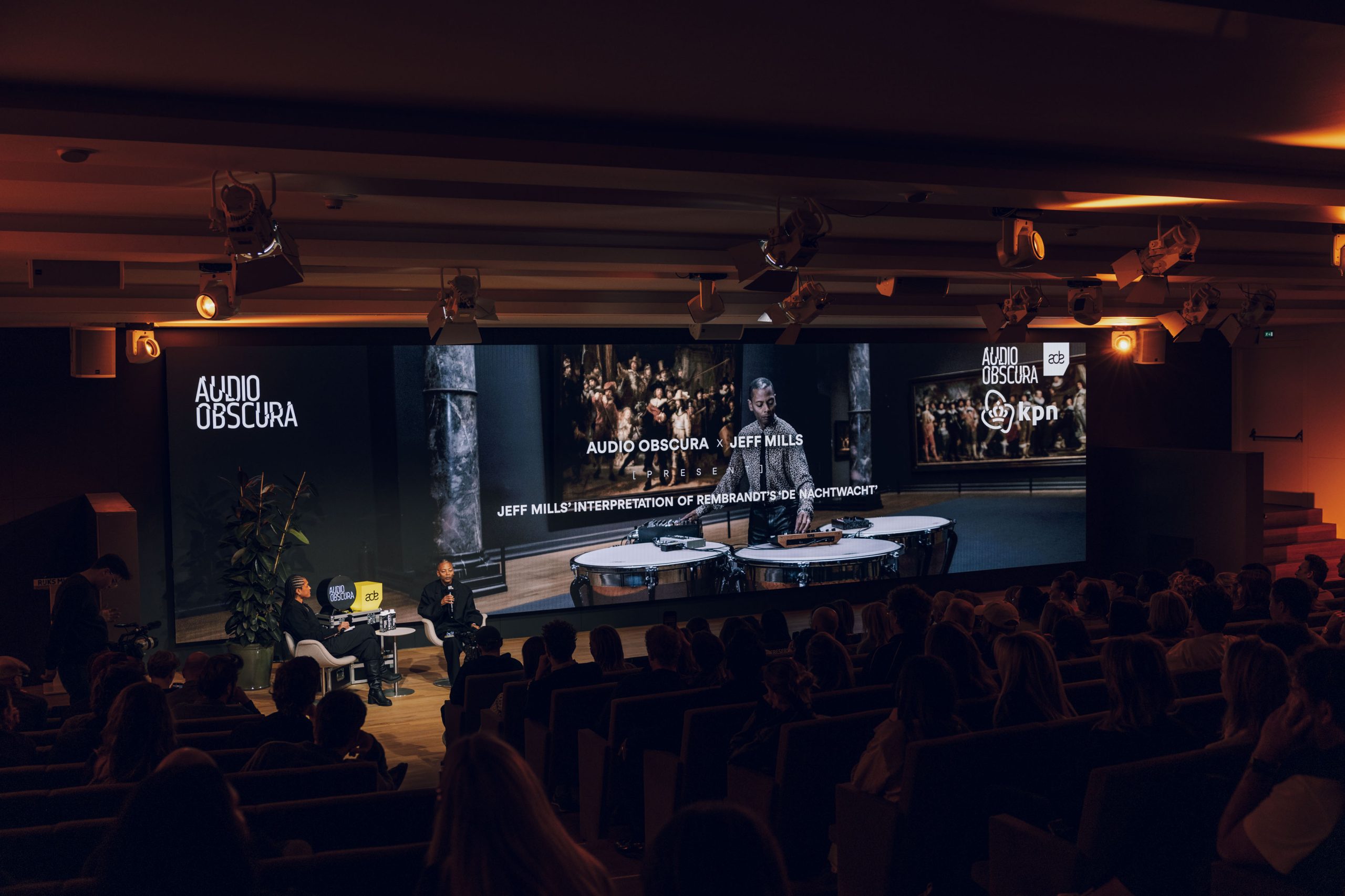
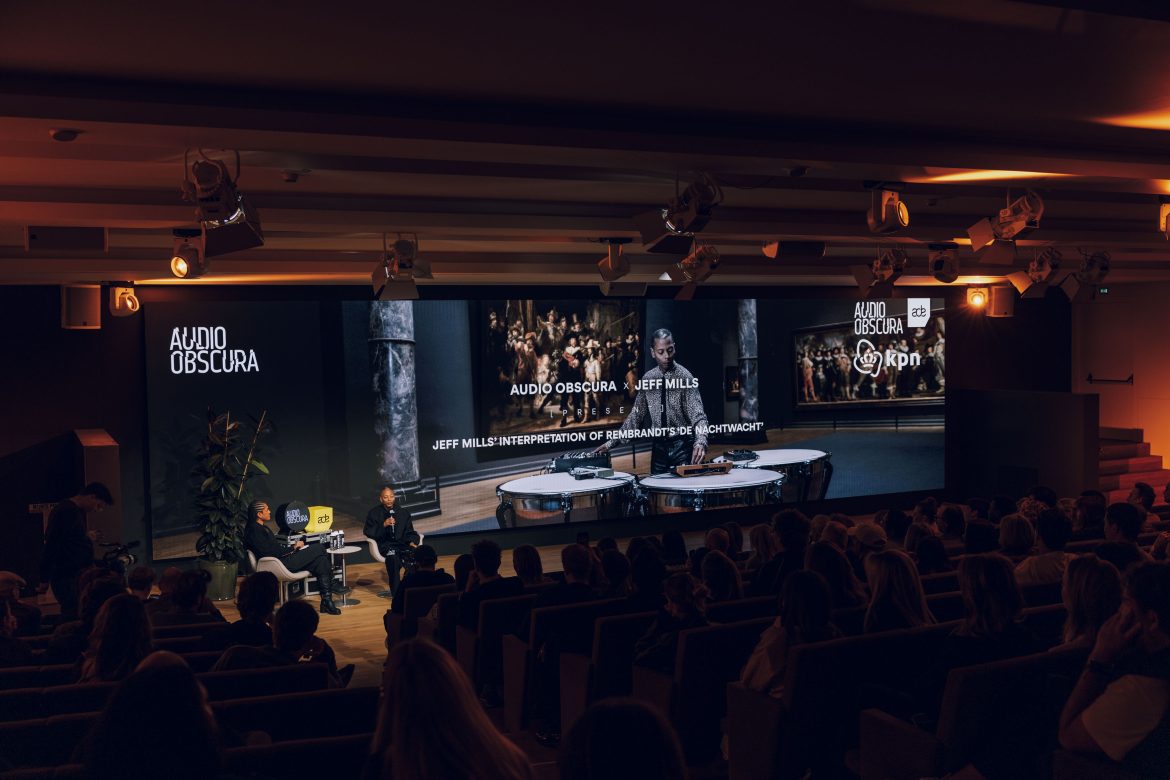
One of the most memorable experiences of ADE 2026 took place at the Rijksmuseum, where we were invited to attend a special event organised by Audio Obscura: Jeff Mills’ musical interpretation of Rembrandt’s masterpiece, The Night Watch.
The project began eight years ago, when Jeff Mills was asked to interpret the celebrated painting through music.
Rather than approaching the commission as a conventional performance, the Detroit techno pioneer took time to explore the artwork, study its history and understand the artistic elements that make it so extraordinary.
The result is a project in which electronic music becomes a way of looking at and responding to one of the most important paintings in art history.
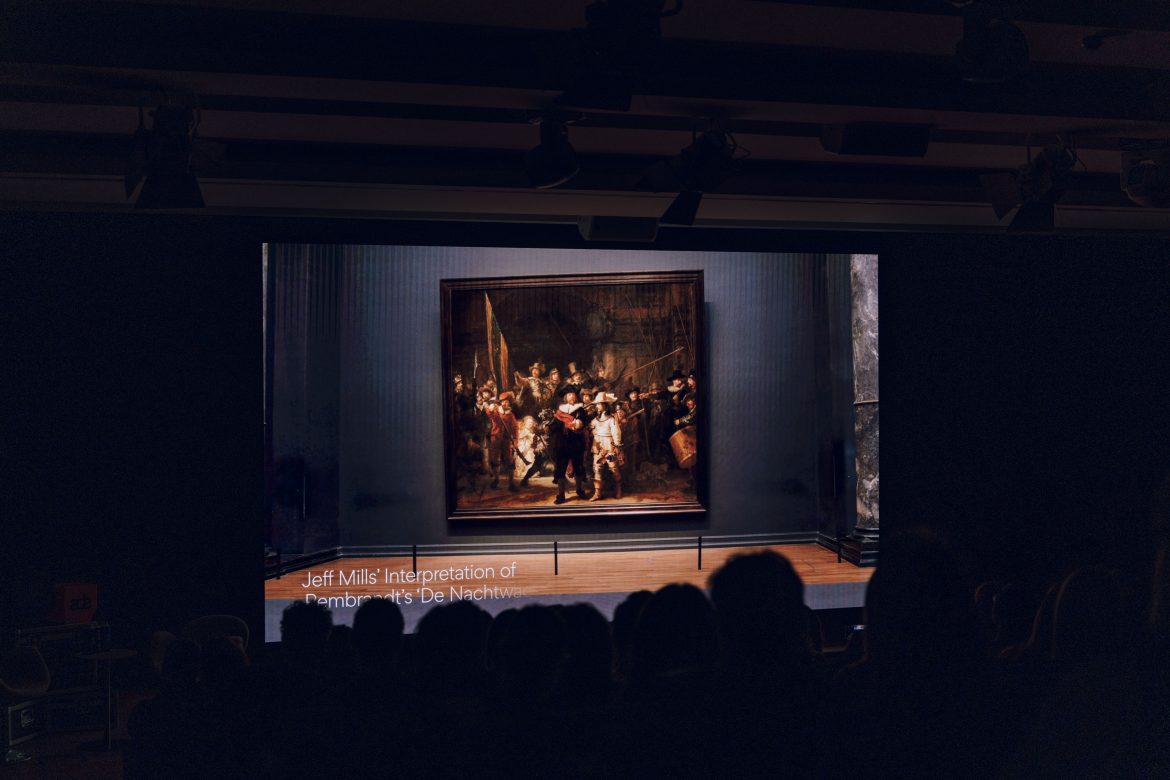
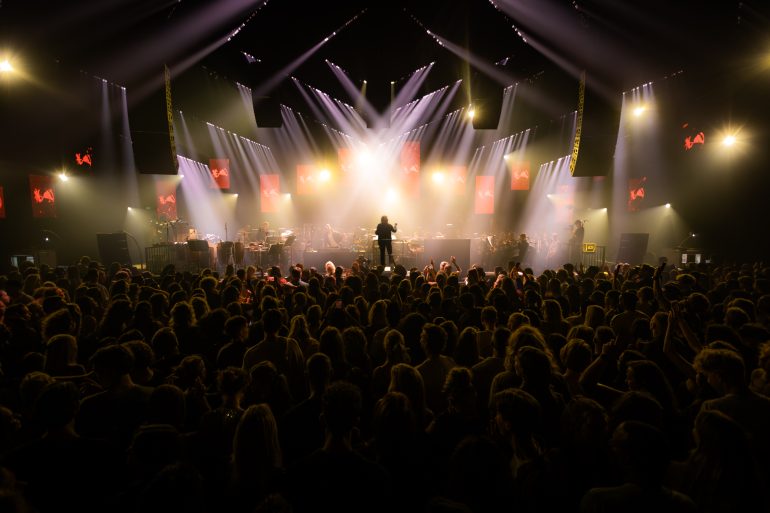
At the Rijksmuseum, the audience experienced the project through an approximately 50-minute audiovisual presentation, combining specially created footage of the painting with images of Jeff Mills performing.
The camera moved across the paint, focusing on individual figures, details and, above all, Rembrandt’s extraordinary use of light.
Different areas of the painting emerged on screen, allowing the audience to observe details that might otherwise go unnoticed when looking at the work as a whole.
Photo Courtesy of Audio Obscura
The musical performance itself unfolded in two distinct sections, each with its own character and approach.
In the first part, Jeff Mills worked with CDJs, creating a carefully constructed DJ set that brought together a series of his own musical compositions developed in relation to the painting.
The music created a sound journey that felt like an invitation to step inside Rembrandt’s world and experience the painting through music.
The second part introduced a clear change in both appearance and musical language.
After changing his outfit, Jeff Mills moved away from the CDJs and began working with electronic machines, including a drum machine.
The performance became more focused on sound creation and live manipulation, offering a different perspective on the relationship between the artist and the artwork.
This was perhaps the most fascinating aspect of the experience for me. My personal impression was that, in the first section, Jeff Mills was taking us into the painting through music.
In the second, it felt as though he was using his machines to express what the painting itself had communicated to him.
It is, of course, my own interpretation of the performance, but that was the feeling I took away from it.
Following the presentation, Jeff Mills took part in an interview in front of the audience, sharing insights into the creative process behind the project.
He explained that when he was first approached, he spent a considerable amount of time studying Rembrandt’s work and carrying out extensive research before developing his musical interpretation.
His words offered a deeper understanding of the thought and preparation behind the performance, revealing how much artistic exploration had taken place before the music was created.
For me, attending this event was a truly remarkable experience, not simply because of the opportunity to see Jeff Mills present such a unique project inside the Rijksmuseum, but because it offered a different way of experiencing electronic music.
Away from the dancefloor, the club atmosphere and the familiar language of DJ culture, music became part of a wider artistic conversation.
This is one of the things that makes Amsterdam Dance Event so special.
Alongside its countless club nights and performances, ADE creates opportunities for electronic music to meet other disciplines, enter unexpected spaces and reach audiences in new ways.
Seeing Jeff Mills engage with Rembrandt’s The Night Watch through sound, images and technology, in the museum that houses the masterpiece, was undoubtedly one of those experiences that make ADE much more than a music event.
It was a reminder of how far electronic music can go when artists are given the freedom to explore beyond its traditional boundaries.
Before rave culture became a global phenomenon, finding an underground party could be an adventure in itself. Ravers would meet at a designated location, receive a map and directions, and follow the trail to a party whose exact destination had often remained a secret. That meeting point was known as a map point — a small but powerful expression of the community, discovery and shared spirit at the heart of […]