Some records capture the spirit of their time, while others seem to reach beyond it, opening a door to sounds and possibilities that listeners have never quite encountered before.
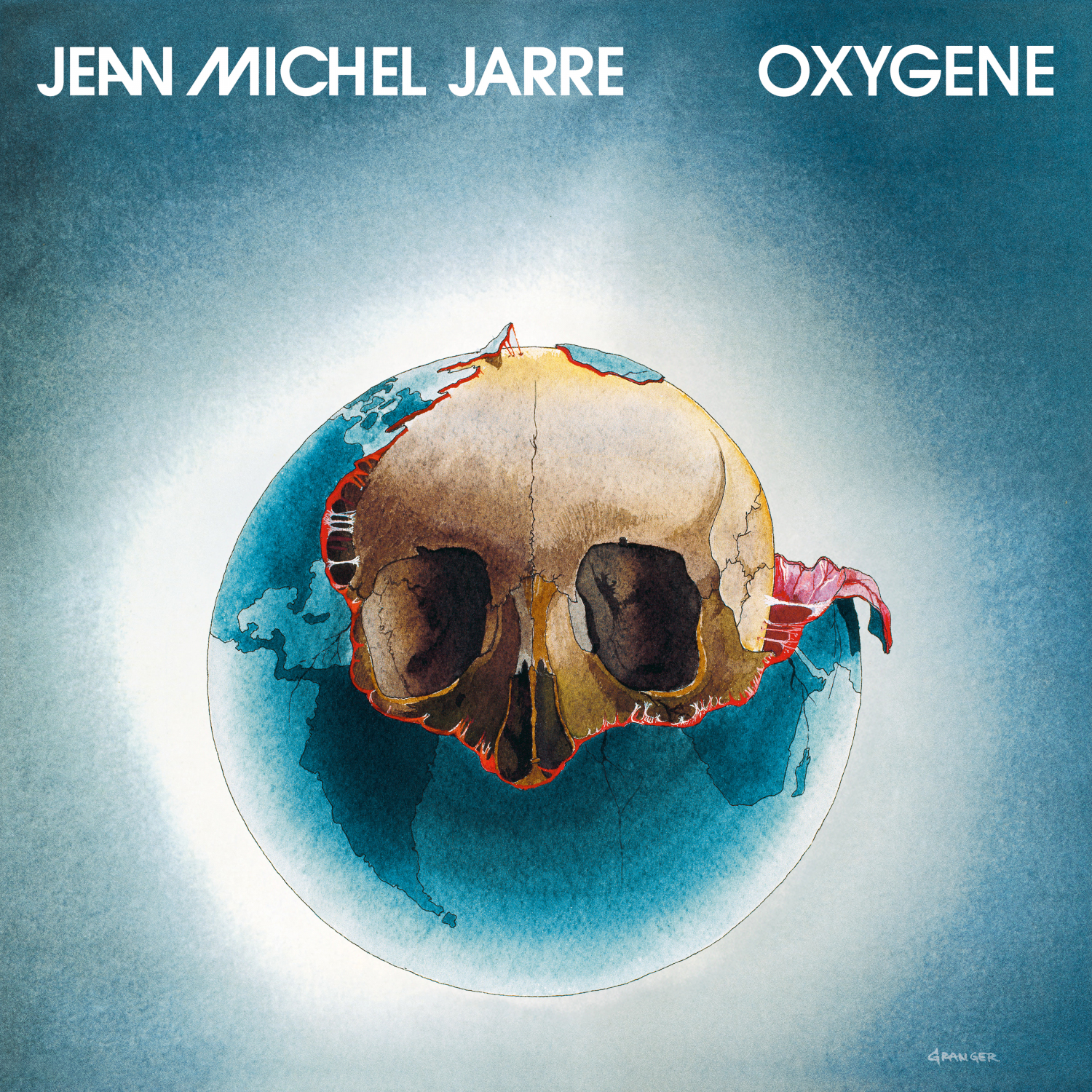
Jean-Michel Jarre’s Oxygène belongs to the latter category. First released in France in 1976 before reaching international audiences in 1977, the album helped bring electronic music into the global spotlight, turning synthesizers and experimental sound design into the foundations of a musical language that would influence generations of artists.
Now, fifty years after its arrival, Jarre is celebrating the record with a special anniversary edition, due on 20 November 2026 via BMG, bringing the original stereo mix back into focus while introducing Oxygène in Dolby Atmos for the first time.
The story behind the album remains as compelling as the music itself. Jarre created Oxygène in a former kitchen in his Paris apartment, working with an eight-track tape recorder, a handmade mixer and a collection of synthesizers and electronic instruments.
It was an intimate, experimental environment in which the possibilities of electronic sound could be explored without the conventions of traditional studio production dictating the result.
From that modest setting emerged a record that would eventually sell more than 18 million copies worldwide, establishing Jarre as one of the defining figures in electronic music and demonstrating that sounds once considered unconventional could reach an audience far beyond the boundaries of experimental music.
What made Oxygène so distinctive was not simply its use of technology, but the imagination with which Jarre approached it.
The album unfolded like a landscape, allowing sequences, textures and evolving synthesizer tones to create a sense of movement and atmosphere that felt unlike anything familiar at the time. In his new liner notes for the anniversary edition, The Guardian’s Alexis Petridis recalls how the record sounded like “a curious transmission from the future” when it entered the UK singles chart in 1977.
Half a century later, that description still feels remarkably relevant, as electronic music has become central to contemporary culture and the sounds explored by Jarre have helped shape the vocabulary of countless producers and performers.
The 2026 edition approaches this legacy with a clear intention: to preserve the character of the original recordings rather than reshape them for the present.
At its centre is a new remaster of the original stereo mix, created from the original tapes in an effort to retain the dynamics, depth and movement that defined Jarre’s analogue sound.
“When I created Oxygène, I was working directly with analogue instruments and tapes, and the sound had a particular depth, movement and life,” Jarre explains, describing the decision to return to the original tapes as an attempt to preserve those qualities rather than alter them.
It is an approach that recognises the importance of the recording itself, allowing listeners to rediscover its details while remaining connected to the creative process that shaped it in the first place.
One of the most significant additions is the album’s first Dolby Atmos mix, included in a deluxe Blu-ray mediabook alongside a new 5.1 surround mix, the 2026 stereo remaster and selected archival material.
For a record built around layers of synthesizers and carefully constructed sonic environments, immersive audio offers another way to explore the relationship between sound and space.
The release will also be available on 180-gram black vinyl, half-speed mastered and cut by Miles Showell at Abbey Road Studios, as well as on limited-edition coloured eco-vinyl, CD and digital formats.
These different editions reflect the many ways in which listeners continue to engage with recorded music, while the return to the original tapes keeps the focus firmly on the qualities that made Oxygène so distinctive in the first place.
The anniversary also provides an opportunity to consider the album’s influence through the perspectives of artists and writers from different generations.
Alongside Petridis’s new liner notes, the release features reflections from Rolling Stone contributor Alma Rota, German writer Torsten Groß and electronic artists Kelly Lee Owens and Solomun.
Rota describes Oxygène as something that can become image, concert, architecture and landscape, an artwork that each era can reinterpret as technologies and listening habits evolve.
It is a fitting observation for a record that has remained culturally relevant not by standing still, but by continuing to invite new ways of hearing and understanding it.
Jarre’s own work continues to connect the history of electronic music with the questions shaping its future. He is currently working on new music, while his forthcoming book, Machines: A History of Electronic Music, due on 29 October 2026 from Thames & Hudson, explores more than a century of musical innovation through 130 instruments from his collection.
The volume traces the evolution of electronic and electroacoustic instruments from early electrified machines to artificial intelligence algorithms, with contributions from artists including Armin van Buuren, Vince Clarke, Gillian Gilbert, Richie Hawtin, Gary Numan, Nick Rhodes and Hans Zimmer.
Its subject matter reflects a creative world in which the relationship between human imagination and technology continues to evolve, opening new possibilities while raising questions about the role of the artist in an increasingly automated age.
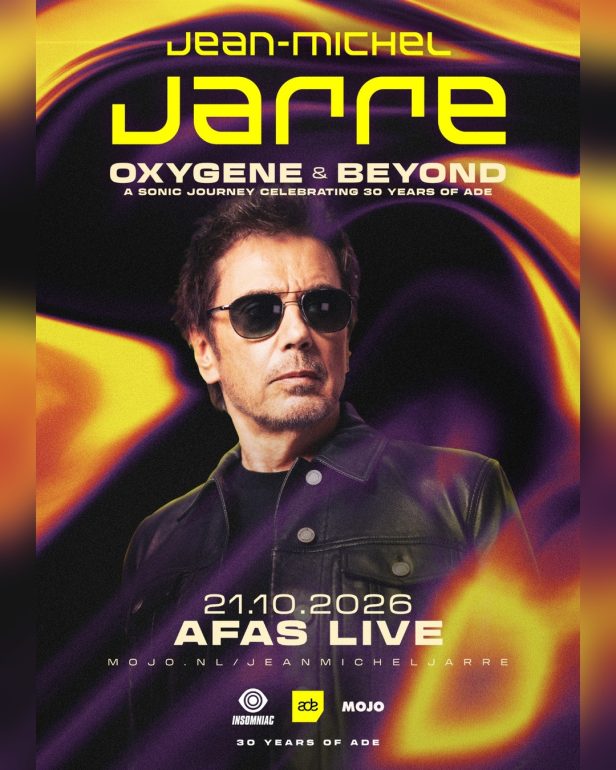
That conversation will also be part of Jarre’s presence at Amsterdam Dance Event, where he is set to appear as Guest of Honour and present the immersive concert OXYGENE & BEYOND: A SONIC JOURNEY CELEBRATING 30 YEARS OF ADE at AFAS Live.
His participation will include discussions on the history of electronic music, emerging technologies and artificial intelligence, connecting the pioneering ideas of the past with the artists and tools shaping the next chapter of the genre.
The anniversary of Oxygène therefore arrives at a moment when its central themes feel especially relevant, as electronic music continues to evolve through new production techniques, immersive listening formats and increasingly sophisticated digital systems.
Fifty years on, Oxygène remains a reminder that technology alone does not create the future; it is the imagination behind it that gives new tools their meaning.
The machines have changed, the possibilities have expanded and the world that once seemed distant has become part of everyday life, yet Jarre’s album still carries the sense of discovery that made it so remarkable in the 1970s.
This anniversary edition offers an opportunity to return to that original vision, not simply to look back at a landmark in electronic music history, but to hear again the creative impulse that continues to move the genre forward.
Jean-Michel Jarre – Oxygène: 50th Anniversary Edition will be released on 20 November 2026 via BMG.
Pre-order: https://JeanMichelJarre.lnk.to/oxygene50
Machines: A History of Electronic Music will be published by Thames & Hudson on 29 October 2026.
Pre-order: https://lnk.to/MachinesJean-MichelJarre